
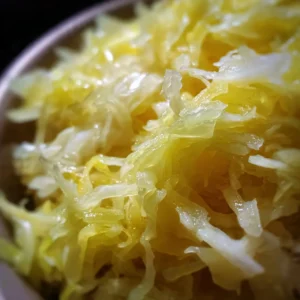
introduction
Every time I think of sauerkraut, I am reminded of the tangy aroma wafting through my grandmother’s kitchen as she prepared this beloved dish. It was not just about the food; it was about the love and tradition that went into every batch. Making sauerkraut from scratch has always felt special to me because it connects us to our roots and reminds us of the importance of simple, wholesome ingredients. You might think that crafting this fermented delight is too difficult, but you’ll find that it’s surprisingly easy and rewarding! This recipe transforms humble cabbage into something vibrant, flavorful, and alive with beneficial probiotics.
why make this recipe
Homemade sauerkraut is not only delicious but also packed with health benefits. Fermentation boosts the nutritional value of cabbage, making it rich in vitamins and probiotics that support gut health. You can customize the flavor to your liking, and it’s a great way to preserve the freshness of cabbage. Plus, making it at home means you can control the ingredients, avoiding unnecessary additives. It’s an economical and satisfying kitchen project that connects you with a time-honored method of food preservation.
how to make Homemade Sauerkraut
Ingredients:
- 1 head of cabbage (approximately 2-3 lbs)
- 1-2 tablespoons natural salt (1 1/2-2 teaspoons salt per pound of cabbage)
- 1 tablespoon caraway seeds (optional)
Directions:
Step 1: Weigh the cabbage to determine how much salt you need. For every pound of cabbage, use 1 1/2 to 2 teaspoons of salt. If you don’t have a scale, just estimate based on the size of your cabbage head. Typically, a head of cabbage weighs between 2-3 pounds, so you would need about 1 to 2 tablespoons of salt.
Step 2: Prepare the cabbage by removing any outer leaves and rinsing the head under water. Keep one nice whole leaf to use later. Halve the cabbage and remove the core, then slice the cabbage thinly using a knife or a mandolin slicer. Save the core if you don’t have glass fermentation weights.
Step 3: Season the cabbage by placing the sliced cabbage in a bowl. Sprinkle the salt over it and massage the salt into the cabbage with your hands. After about 3-5 minutes, the salt will begin to pull liquid from the cabbage. Once you can easily squeeze out liquid and have some brine in the bowl, it’s time to pack the cabbage into a quart-sized glass jar.
Step 4: Pack the sliced cabbage into the jar, pushing it down firmly to eliminate air pockets. Fill the jar until it’s about an inch from the top. Cut a piece from the saved outer leaf to cover the shredded cabbage, then place a glass fermenting weight on top. Pour any leftover brine from the bowl into the jar until the cabbage is completely submerged. Screw on a fermenting lid loosely, so air can escape during fermentation.
Step 5: Ferment the cabbage. Place the jar on a rimmed tray to catch any bubbling liquid that escapes. You may have to empty the tray during the first few days. Keep the fermenting sauerkraut at room temperature for at least 3 days or until it reaches your desired flavor. Typically, the best sour flavor develops between 2-3 weeks.
Step 6: Store the sauerkraut. Once fermentation is complete, move the jar into the fridge. The liquid level may drop, so adding a brine of 2% salt water (1 teaspoon salt for every 1 cup water) will keep your sauerkraut juicy.
how to serve Homemade Sauerkraut
Homemade sauerkraut can be enjoyed in many ways. Serve it as a tangy side dish alongside meats, add it to sandwiches for a crunchy texture, or use it as a topping on salads and grain bowls. It’s also fabulous in dishes like Reuben sandwiches or as a lively addition to tacos. The possibilities are endless!
how to store Homemade Sauerkraut
To store your sauerkraut, keep it in the refrigerator in a sealed jar. It can last for several months when stored properly. Just make sure the cabbage remains submerged in the brine to prevent spoilage. If you notice the liquid level dropping, simply add more brine made from salt and water.
tips to make Homemade Sauerkraut
- Use fresh, organic cabbage for the best flavor and nutrition.
- Don’t rush the fermentation process; patience is key to developing the taste.
- Make sure all utensils and jars are clean to prevent unwanted bacteria.
variation
You can customize your sauerkraut by adding other ingredients like grated carrots, beets, or spices like garlic and dill for extra flavor. Experiment and find your perfect combination!
FAQs
1. How long does it take to ferment sauerkraut?
Sauerkraut typically ferments for 2 to 3 weeks, but the time can vary depending on temperature and personal taste preferences.
2. Can I ferment cabbage without salt?
Using salt is essential in the fermentation process. It helps to draw out moisture and create a suitable environment for beneficial bacteria while inhibiting harmful bacteria.
3. What should I do if my sauerkraut smells off?
If your sauerkraut has a foul smell or shows signs of mold, it’s best to discard it. Proper fermentation should yield a tangy odor, not an unpleasant one.
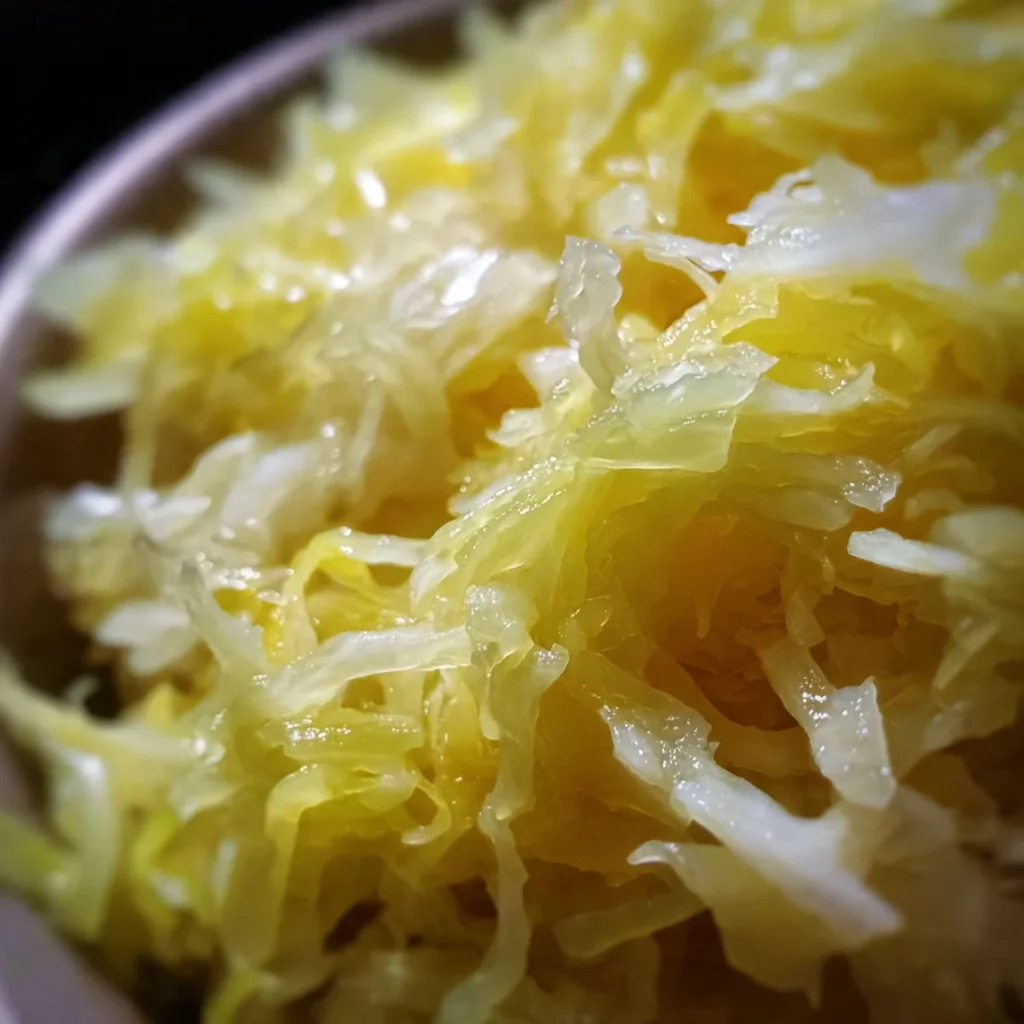
Homemade Sauerkraut
Ingredients
Main Ingredients
- 1 head 1 head of cabbage (approximately 2-3 lbs) Use fresh, organic cabbage for the best flavor and nutrition.
- 1-2 tablespoons 1-2 tablespoons natural salt (1 1/2-2 teaspoons salt per pound of cabbage) Salt is essential for the fermentation process.
- 1 tablespoon 1 tablespoon caraway seeds (optional) Add for extra flavor if desired.
Method
Preparation
- Weigh the cabbage to determine how much salt you need. For every pound of cabbage, use 1 1/2 to 2 teaspoons of salt. You can estimate based on the size of your cabbage head.
- Prepare the cabbage by removing any outer leaves and rinsing the head under water. Halve the cabbage and remove the core, then slice the cabbage thinly using a knife or a mandolin slicer.
- Season the cabbage by placing the sliced cabbage in a bowl. Sprinkle the salt over it and massage the salt into the cabbage with your hands for about 3-5 minutes until it starts to release liquid.
- Pack the sliced cabbage into a quart-sized glass jar, pushing it down firmly to eliminate air pockets. Fill the jar until it's about an inch from the top. Cut a piece from the saved outer leaf to cover the cabbage, and place a glass fermenting weight on top.
- Pour any leftover brine from the bowl into the jar until the cabbage is completely submerged. Screw on a fermenting lid loosely to allow air to escape during fermentation.
Fermentation
- Place the jar on a rimmed tray to catch any bubbling liquid. Keep the jar at room temperature for at least 3 days or until it reaches your desired flavor, typically 2-3 weeks for the best sour flavor.
Storage
- Once fermentation is complete, store the sauerkraut in the refrigerator. To keep it juicy, add a brine of 2% saltwater (1 teaspoon salt for every 1 cup of water) if the liquid level drops.