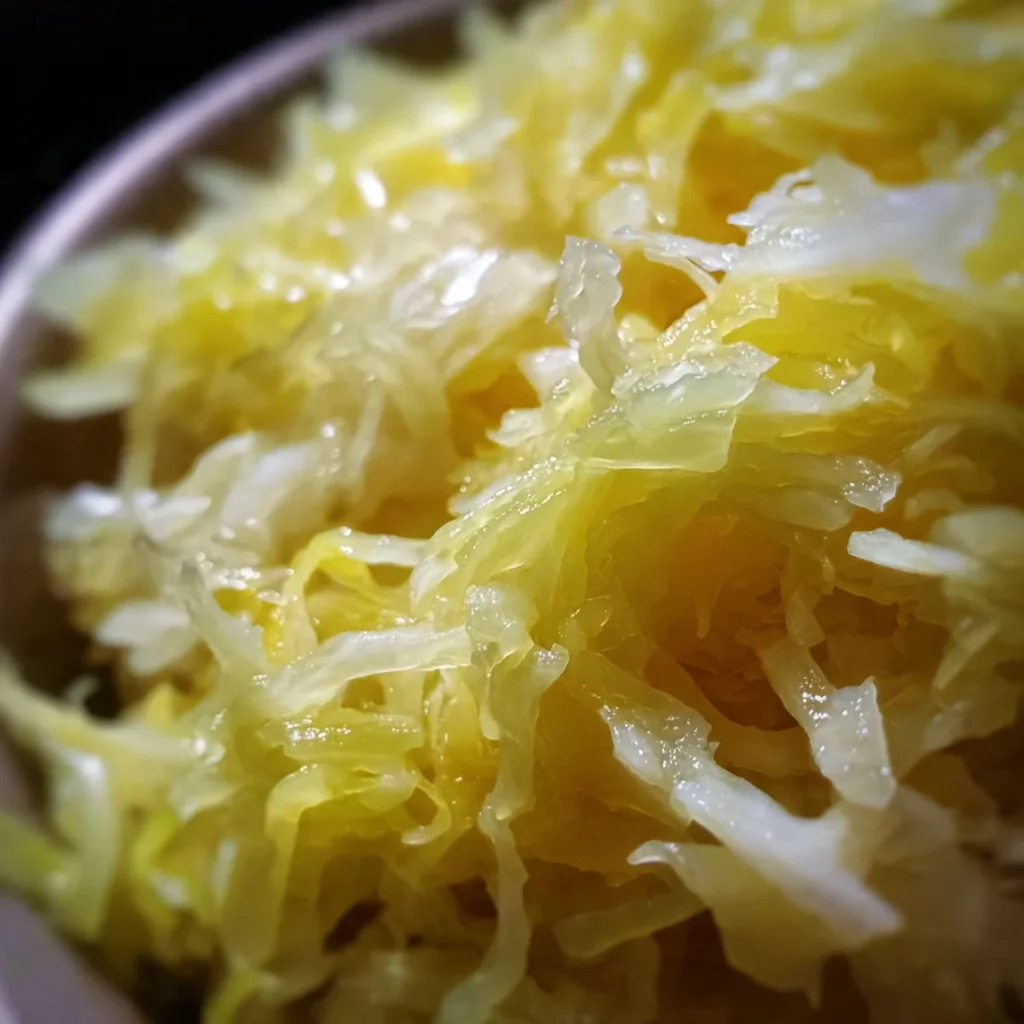
Ingredients
Main Ingredients
- 1 head 1 head of cabbage (approximately 2-3 lbs) Use fresh, organic cabbage for the best flavor and nutrition.
- 1-2 tablespoons 1-2 tablespoons natural salt (1 1/2-2 teaspoons salt per pound of cabbage) Salt is essential for the fermentation process.
- 1 tablespoon 1 tablespoon caraway seeds (optional) Add for extra flavor if desired.
Method
Preparation
- Weigh the cabbage to determine how much salt you need. For every pound of cabbage, use 1 1/2 to 2 teaspoons of salt. You can estimate based on the size of your cabbage head.
- Prepare the cabbage by removing any outer leaves and rinsing the head under water. Halve the cabbage and remove the core, then slice the cabbage thinly using a knife or a mandolin slicer.
- Season the cabbage by placing the sliced cabbage in a bowl. Sprinkle the salt over it and massage the salt into the cabbage with your hands for about 3-5 minutes until it starts to release liquid.
- Pack the sliced cabbage into a quart-sized glass jar, pushing it down firmly to eliminate air pockets. Fill the jar until it's about an inch from the top. Cut a piece from the saved outer leaf to cover the cabbage, and place a glass fermenting weight on top.
- Pour any leftover brine from the bowl into the jar until the cabbage is completely submerged. Screw on a fermenting lid loosely to allow air to escape during fermentation.
Fermentation
- Place the jar on a rimmed tray to catch any bubbling liquid. Keep the jar at room temperature for at least 3 days or until it reaches your desired flavor, typically 2-3 weeks for the best sour flavor.
Storage
- Once fermentation is complete, store the sauerkraut in the refrigerator. To keep it juicy, add a brine of 2% saltwater (1 teaspoon salt for every 1 cup of water) if the liquid level drops.
Nutrition
Serving: 1gCalories: 20kcalCarbohydrates: 4gProtein: 1gSodium: 250mgFiber: 2gSugar: 1g
Notes
Don’t rush the fermentation process; patience is key to developing the taste. Make sure all utensils and jars are clean to prevent unwanted bacteria.
Tried this recipe?Tried this recipe? check me best Recipes
Elysium Recipes